Some dental work lasts a lifetime. Some fail within a few years. The difference comes down to how the treatment is planned and how it fits your specific mouth, bite, and lifestyle.
Dr. Stephen Hoard has been practicing dentistry in New Bern since 1991. That’s 31 years of watching restorations hold up, wear out, or fail. He’s seen crowns he placed in the early 1990s that are still functioning perfectly. He’s also seen beautiful restorations from other offices that didn’t make it five years.
Dr. Nicole Hoard brings a different perspective. She trained at the Medical University of South Carolina, completed an AEGD residency in Hawaii, and has done advanced training through The Dawson Academy. She combines modern materials science with the same philosophy her father has practiced for decades.
Together, they’ve got something rare: 31 years of historical data from one community, paired with current best practices. Here’s what that perspective teaches about which smile fixes actually last.
Three Factors That Determine Longevity
When we look at a restoration that has lasted 20 or 30 years, we can usually point to three things that made it successful.
Bite function
This is the one most patients never think about, and it’s often the most important. A crown or implant placed on a tooth that doesn’t meet the opposing teeth correctly will wear down faster. The forces aren’t distributed evenly. The restoration fights against the bite instead of working with it. Over time, that leads to cracks, chips, and failure.
This is where The Dawson Academy philosophy makes a difference. Dr. Stephen teaches other dentists about occlusion and bite function because he knows how much it affects outcomes. When a restoration is designed around a balanced bite, it lasts longer and feels more natural.
Material quality
Materials have changed a lot over the past 31 years. In the 1990s, most crowns were porcelain-fused-to-metal. They worked well, but they could show a dark line at the gumline over time. Today, we use zirconia and high-quality ceramics that look more natural and hold up better to wear.
Implants have changed too. Today’s titanium posts integrate with the jawbone more predictably than earlier versions. The surfaces are engineered to support better healing. That means a higher success rate and a longer lifespan.
Home care
This is the factor patients control. A perfectly placed crown can fail if you don’t keep it clean. Gum disease, decay around the edges of a restoration, and clenching or grinding at night all shorten the lifespan of dental work. That’s why we spend so much time talking about home care and about protecting teeth with night guards when needed.
What We’ve Learned About Crowns
Dr. Stephen has placed thousands of crowns over the years. The patterns are clear.
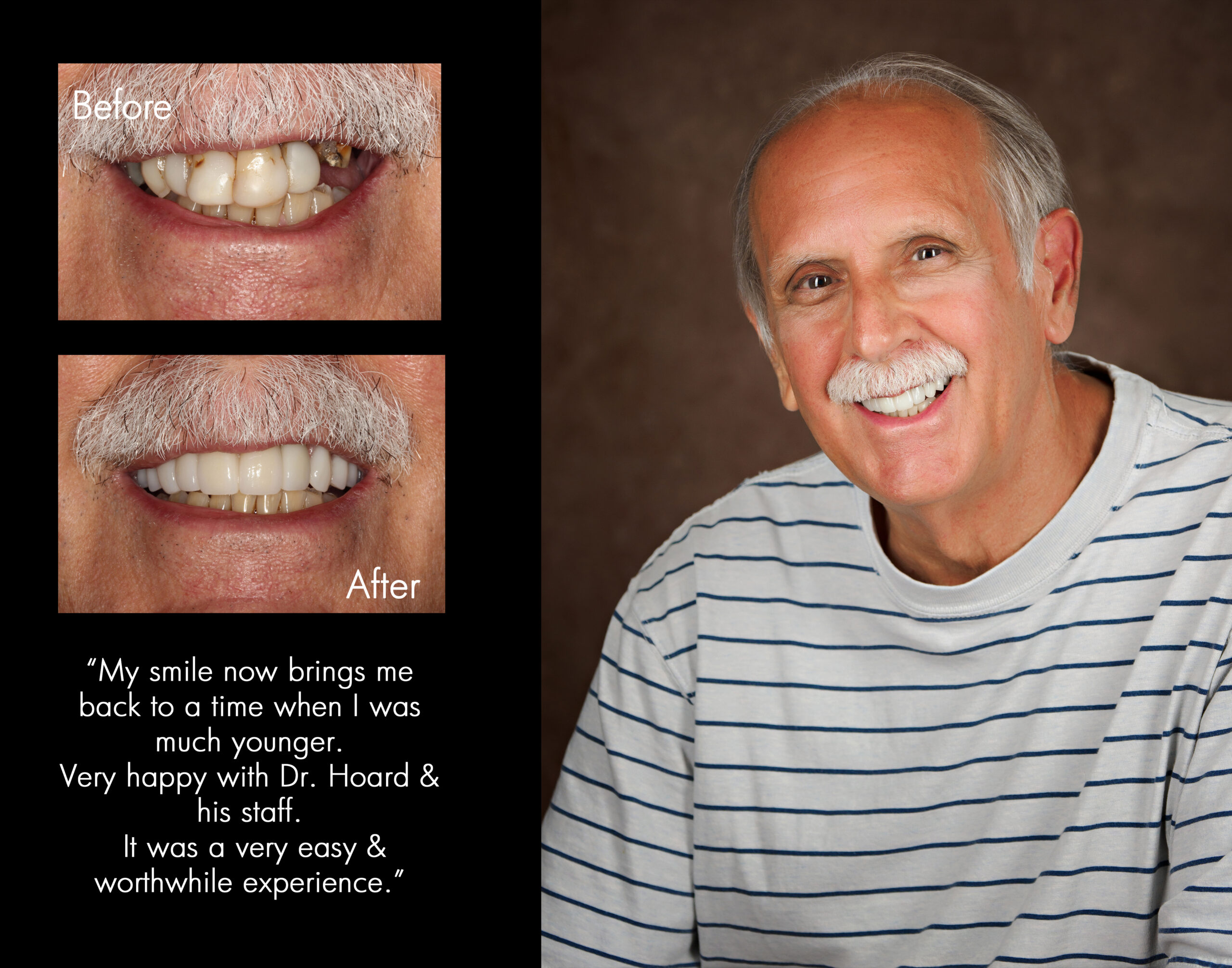
Crowns that last 20 or 30 years fit properly, match the bite, and get regular maintenance. Crowns that fail early usually have a few common problems. The margin between the crown and the tooth wasn’t sealed perfectly. The bite was off. The patient developed gum disease or started grinding their teeth without realizing it.
When we plan a crown today, we keep those lessons in mind. We use digital imaging to check the fit. We evaluate the bite before and after placement. We talk to patients about habits that could shorten the lifespan of their restoration. That’s what 31 years of watching failures and successes teaches you.
What We’ve Learned About Implants
Dental implants in New Bern are one of the most successful procedures in modern dentistry, but they’re not all equal. Some implants last decades. Some fail within a few years. The difference usually comes down to planning.
Successful implants have three things in common. The bone around the implant is healthy and dense enough to support it. The implant is placed at the right angle and depth. The restoration on top is designed to distribute bite forces correctly.
When any of those things are off, the implant can fail. That’s why we take our time with planning. We look at the full picture before we place anything. Dr. Nicole’s training at MUSC and through the Dawson Academy gives her the diagnostic skills to evaluate each case carefully. Dr. Stephen’s decades of experience give him a sense of what works in real life, not just on paper.
That combination matters. It’s one thing to know the textbook ideal. It’s another to know how that ideal holds up in an actual mouth over 20 years.
The New Bern Factor
Practicing in one community for 31 years gives you a perspective that’s hard to replicate. You see patterns that aren’t obvious to someone who moves around a lot.
In New Bern, for example, we see many patients with wear patterns from clenching and grinding. That’s common in busy, stressful lives. We also see patients who’ve had dental work done decades ago by other dentists who’ve since retired or moved away. Those cases require a different kind of care, because we need to make sure the older work is still functioning and won’t cause problems later.
We also benefit from watching our work over time. When Dr. Stephen sees a crown he placed 25 years ago still going strong, he can look at what made it work. When he sees one that needs replacing, he can look at what went wrong. That feedback loop is invaluable. It’s how you get better at what you do.
What This Means for You
If you’re considering a crown or an implant, the most important question isn’t just “who’s the best dentist near me.” It’s “who will plan this in a way that lasts?”
At Hoard & Hoard Cosmetic and Restorative Dentistry, that planning looks like a comprehensive exam. We don’t just look at the tooth that needs fixing. We look at your bite, jaw, gums, and overall oral health. We take imaging to understand what’s happening under the surface. We explain what we find and what we recommend, and we make sure you understand the trade-offs.
Then we place the restoration with the same care we’d want for our own family. Because for us, that’s who you are. We’ve been treating families in New Bern for three decades. Many of our patients are the children and grandchildren of people Dr. Stephen treated when he first opened his practice.
That kind of continuity is rare. And it shapes how we think about every crown, every implant, and every smile we help restore.
Ready to Explore Your Options?
If you’ve been considering a crown or an implant, we’d love to talk with you. Dr. Stephen and Dr. Nicole will walk you through what’s possible, what it costs, and what the timeline looks like. You’ll leave with a clear plan and a better understanding of what makes a restoration last.
Call Hoard & Hoard at (252) 507-0373 to schedule your visit, or request an appointment online. We’re proud to serve patients across New Bern and the surrounding communities, and we’re here to help you build a smile that lasts.